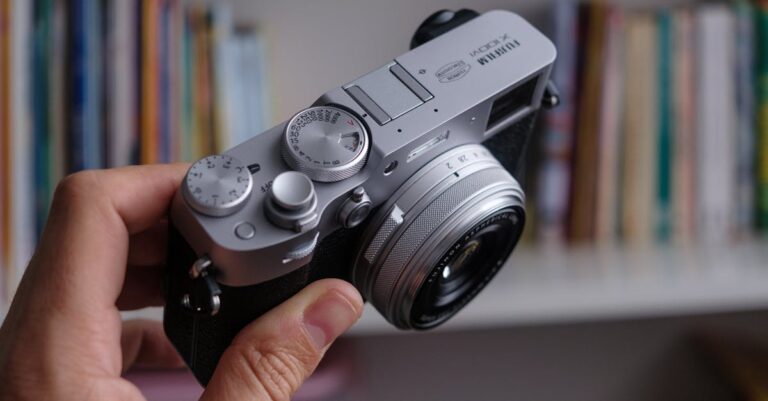
A Heavyweight Rivalry for Professional Photography: Nikon Z9 vs. Sony A9 II
In the bustling world of professional photography, choosing the right camera can feel like an almost mythological quest. Sometimes, two cameras seem to vie for supremacy, each model embodying the ideal dream of a seasoned photographer. This is the context for the confrontation between the Nikon Z9 and the Sony A9 II, two major players in the mirrorless segment, designed to push the boundaries of speed, fidelity, and durability. Both cameras stand out for their impressive features, their combination of advanced technologies, and their ability to capture the moment with surgical precision.
Whether you’re a field reporter, a sports photographer, or a wildlife specialist, the right choice depends not only on technical performance, but also on suitability for your professional context. In 2025, with the market seeing an explosion of multifunctional models from brands such as Canon, Fujifilm, Panasonic, and Leica, the question remains: which of these two giants meets your demands for creativity and efficiency? A detailed look at their specific features, strengths, and limitations is essential to making an informed choice. This analysis will examine their price/performance ratio, ergonomics, video capabilities, and their ability to integrate into a modern professional workflow.

LECTURE SUGGÉRÉE
Canon EOS 5D Mark IV vs Nikon D850: Why Choose One Over the Other?
In the world of professional photography, choosing a DSLR camera often poses a dilemma. Two…
LIRE L'ARTICLE
A technical biography: from historical footprint to innovations in 2025
Before diving into the details, it seems appropriate to recall the origins and evolution of these two cameras, which, in 2025, leave behind a colossal work of research and development. The Nikon Z9, launched in 2021, is the pinnacle of Nikon’s high-performance photography philosophy. With a 46-megapixel full-frame sensor, it embodies a vision of the world at the crossroads of realism and picturesqueness. Its architecture, designed for versatility, battery life, and durability, makes it an ideal companion for those who operate in demanding environments.
For its part, the Sony A9 II, released in 2020, has revolutionized sports and action photography thanks to its exceptional speed and impeccable autofocus. Equipped with a 24-megapixel sensor, it prioritizes speed and responsiveness with its 20 frames per second shooting rate, while retaining improved ergonomics compared to its predecessors. Its compact design and enhanced connectivity make it an excellent option for those who need to combine mobility and performance in the field.
In 2025, these two models received various software and hardware updates, notably to optimize their battery life, video capacity, and high ISO noise management. The upgrade in their optical stabilization, their compatibility with high-speed memory cards (SD for the Sony, CFexpressB/XQD for the Nikon), and their ability to film in maximum resolutions (8K for the Nikon, 4K for the Sony) demonstrate their commitment to remaining at the forefront of technology. Their origins, although different, are united in an approach that combines innovation, durability, and ease of use.

Nikon Coolpix P950: Why choose this camera over the Canon PowerShot SX70 HS?
Impressive Zoom and Remarkable Performance: The Nikon Coolpix P950 Versus the Canon PowerShot SX70 HS The world of recreational and…
CONTINUER LA LECTURE
Performance in photography: where do they exploit their maximum potential?
In pure photography, every detail counts, and the ability to capture the exact moment of a gesture or expression can make all the difference. In terms of speed, both devices shine with their maximum frame rate of 20 frames per second, a feat shared in the high-end world. But their difference lies in their way of approaching the dynamics of burst shooting, particularly in a demanding professional context.
The Nikon Z9 stands out with a definition of 46 megapixels, a resolution that leaves room for all the arts of large print, fine exposure and advanced post-production. Its sensor and noise management allow it to work effectively up to ISO 12,800, with flexibility to increase sensitivity up to ISO 102,400. The integrated stabilization and full tropicalization make it suitable for facing extreme conditions, whether in the great outdoors or in sporting events in the rain or dust.
The Sony A9 II, with its 24 megapixels, favors speed and autofocus precision. Its face and eye tracking works with incredible efficiency, even in a chaotic or fast-moving environment. Noise management is also remarkable, allowing high sensitivities to be used for improvised shots or in low light conditions. The reserve of 20 frames per second in electronic mode represents a real strength for capturing fast actions, such as a sprint or a spectacular jump.
Both cameras also feature a large raw buffer capacity, with the Nikon far surpassing what the Sony offers, allowing for uninterrupted shooting over long sessions or in high resolution. Amateurs or professionals of sports, wildlife, or demanding event photography will find these two models allies with their own merits, depending on whether resolution or responsiveness is a priority in their practice. Specifications
| Nikon Z9 | Sony A9 II | Sensor Resolution |
|---|---|---|
| 46 MP | 24 MP | Burst Rate |
| 20 fps | 20 fps | Standard ISO Sensitivity |
| 32 – 102400 | 100 – 51200 | Noise Management |
| Excellent up to ISO 12800 | Good at high sensitivities | RAW Buffer |
| ≥ 300 images | 131 images | Concrete Use Cases |
Photographing wildlife with extreme precision, where every detail counts.
- Capturing a sporting event with a 20 fps burst to ensure you don’t miss a single movement.
- Taking portraits in low light without sacrificing image quality.
- Taking long burst series in burst mode without interruption or slowdown.
- To learn more about these features, visit
this detailed article. Discover our comprehensive camera comparison guide, where we analyze the best options on the market to help you choose the ideal camera for your needs and budget.Video Quality and Compatibility: The Essential Shift for 2025

The Nikon Z9 shines with its 8K UHD capabilities, up to 30 frames per second, with no time limit thanks to its remarkably efficient heat dissipation. Its video spectrum also extends to 4K at 120 fps, allowing for smooth and precise slow-motion effects. Compatibility with fast cards like the CFexpressB ensures a smooth workflow right from the recording stage.
The Sony A9 II, meanwhile, offers high 4K UHD capacity at 120 frames per second, but with a recording time limit imposed by its thermal system. Its advantage lies in its lighter weight, ergonomic grip, and the ability to use its features for documentaries or sports reporting in mobile situations. The optical and electronic stabilization is also very effective for a professional look.
Both models allow for shooting in difficult conditions, with remarkable management of moiré, encoding, and autofocus in video. Their compatibility with editing software like Adobe Premiere or DaVinci Resolve ensures seamless integration into a modern workflow. The presence of HDMI, microphone, headphone, and remote control ports enhances their appeal, even for demanding productions.
Criteria
Nikon Z9
| Sony A9 II | Video Resolution | 8K UHD at 30 fps |
|---|---|---|
| 4K UHD at 120 fps | Recording Limit | None (high-performance thermal system) |
| Limited to approximately 30 minutes | Video Storage Type | CFexpress B / XQD |
| SD UHS-II | Stabilization | Integrated, high-performance |
| Optical and Electronic | Codec Support | ProRes, H.264, H.265 |
| ProRes, XAVC S | Ergonomics, Interface, and Workflow: A Subtle Balance for Professionalism | High-end equipment must combine performance and ease of use. Implementing a seamless workflow saves professionals valuable time, whether during a shoot or in post-production. Nikon and Sony have both prioritized this issue by offering intuitive interfaces, organized menus, and quick access. |
The Nikon Z9, with its numerous customizable buttons, offers ergonomics that some describe as demanding but very comprehensive. Its 3.69 MP electronic viewfinder ensures optimal sharpness, even in bright light. The swivel, touchscreen, and tilting screen facilitate composition from all angles, especially when shooting from above or at ground level.
For the Sony A9 II, it’s its lightness and simplicity that are appealing: its ergonomics were designed for rapid movements during sports or reportage photography. Its more streamlined interface allows for immediate handling, even for those new to the series. Wi-Fi and Bluetooth connectivity facilitate instant transfers, and the simplified menu speeds access to essential settings.
But beyond pure ergonomics, it’s their compatibility with image management software and their ability to integrate into a professional ecosystem that count. Nikon, with its D and Z series, integrates well into an Adobe or Capture One workflow, while Sony offers increased compatibility with its own tools and optimized management via mobile apps.
Customized settings quickly accessible
Intuitive menus with modular configuration
- Compatibility with modern workflows
- Advanced connectivity (Wi-Fi, Bluetooth, Ethernet)
- Compatibility with image management tools like Capture One or Lightroom
- Impact of ergonomics on productivity
- Effective handling directly influences the spontaneity and quality of shots. The ability to quickly configure preferences or access essential settings without wasting time is a real differentiator for professionals in high-pressure situations today.
https://www.youtube.com/watch?v=VH7O0DzxOt8
Price, accessibility, and value for money in 2025
To complete this analysis, it is also useful to compare their maintenance costs, warranties, and mandatory or additional accessories, such as batteries, cards, or grips. Compatibility with prestigious brands like Sigma, Tamron, or even Leica or Fujifilm lenses, can also weigh in the purchasing balance depending on specific projects.
Criteria
Nikon Z9
Sony A9 II
| Approximate Price in 2025 | €5,999 | €3,500-4,000 |
|---|---|---|
| Value for Money | Excellent for demanding professionals | Best for those seeking mobility |
| Accessory compatibility | Strong, including Sigma, Leica, and Tamron | Increased compatibility with Sony and third-party lenses |
| Durability | Robust, weather-resistant, suitable for extreme conditions | Robust, lightweight, suitable for travel |
| Maintenance cost | Moderate, with specialized spare parts | Balanced, with maintenance options |
| Ergonomic challenges: towards optimal productivity in 2025 | Ergonomics designed for the professional cannot be limited to simple button layout. Ease of use, quick access to settings while shooting, as well as compatibility with peripheral equipment, shape the photographer’s daily life. In 2025, the integration of touch technologies, smart menus, and configurable interfaces will play a key role in this adaptation. | The Nikon Z9, with its high-density viewfinder and vari-angle screen, prioritizes shooting from all angles, as does the extensive customization of its controls. Fully weather-sealed, it’s designed to withstand all kinds of environments, from deserts to fog. However, its complexity requires a certain level of mastery to fully exploit its potential. |
The Sony A9 II, with its apparent simplicity, is ideal for fast-moving news reporting or sporting events where every second counts. Its light weight and uncluttered menus facilitate immediate handling, allowing you to focus on the scene rather than the camera.
Easy access to essential settings
Organized and customizable menus
Compatibility with mobile devices or controllers
- Lightweight or robust design as needed
- Touch capabilities for certain functions
- Impact of this ergonomics on workflow
- Optimizing workflow doesn’t just mean speeding up shooting, it also streamlines post-production. Consistent raw file management and compatibility with various professional software ensure that every minute spent shooting can quickly translate into an image ready for publication or print.
- https://www.youtube.com/watch?v=TwE9T8011gY
Choosing the Right Camera: Towards a Strategic Decision in 2025
The Nikon Z9 vs. Sony A9 II dilemma isn’t resolved solely by numbers or technical specifications. It also involves understanding the context in which each camera will be used: a high-end portrait studio, a bustling sports field, or the wilderness on long-term travel. Consideration must also include financial considerations, compatibility with other brands such as Canon, Fujifilm, Panasonic, or Olympus, and each professional’s overall environment. Comparative tests conducted this year by several experts highlight a clear trend: while the Nikon Z9 dominates in terms of resolution, robustness, and video capabilities, the Sony A9 II excels in its lightness and quick adaptation. The choice is therefore not straightforward, but rather depends on a careful assessment of one’s priorities. To better guide your decision, taking into account feedback on this platform or on this Camerarace comparison will help you make an informed choice.
Nikon Z9
Sony A9 II
Overall Performance Versatile, high resolution, robust Lightweight, fast, advanced autofocus Ideal Use Studio, extreme nature, professional video
| Sports, fast reporting, mobility | Main Advantages | Image quality, 8K video, battery life |
|---|---|---|
| Lightweight, autofocus, burst shooting | Disadvantages | Weight, complexity of learning |
| Limited battery life for high-resolution video | FAQ: skills, compatibility and future | Can the Nikon Z9 replace a SLR? |
| Yes, offering all the features of a pro device with modern lightness and flexibility. Its robustness and video capacity make it a credible alternative. | Is the Sony A9 II good for low light photography? | Thanks to its advanced noise management and high sensitivities, it allows you to produce beautiful images in difficult conditions, even if its limited resolution may pose questions for certain demanding work. |
| Which device to choose for video in 2025? | The Nikon Z9, with its 8K capabilities, remains the best option for professional filming, particularly for its efficient heat dissipation. The Sony A9 II, for its part, ensures sufficient quality for the majority of fast or mobile productions. | Can the two devices complete a catalog of varied lenses? |
Absolutely. Nikon, Sony, but also Sigma or Tamron offer a wide range of compatible lenses, allowing the camera to be quickly adapted to all types of shots.
- Which of the two benefits from a better quality/price ratio in 2025?
- Depending on usage, the Sony A9 II is more affordable, but the Nikon Z9 is a more sustainable investment for those who take advantage of its advanced features.