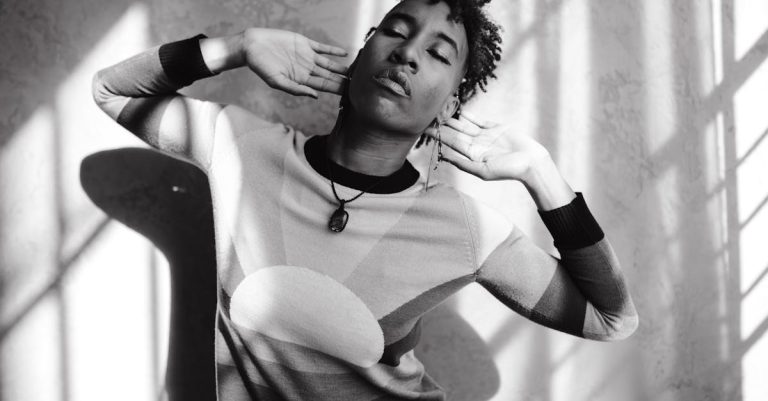
For several decades, Annie Ernaux has been an emblematic figure of French literature, whose work imbues a vision of the world, somewhere between realism and the picturesque, with memory and emotion. Her interest in photography was never limited to writing, but rather unfolded as an observation of everyday life, an attempt to capture the ephemeral in its simplest and most authentic forms. In Aix-en-Provence, an exhibition entitled “Extérieurs – Annie Ernaux et la photographie” (Exteriors – Annie Ernaux and Photography) highlights this unique relationship between literature and visual art, offering an immersion into the intimacy of her portraits and snapshots of urban life. Through this approach, Ernaux leaves behind a colossal body of work where collective and individual memory intertwine, revealing the discreet magic of ordinary life. The confrontation between her texts and a selection of photographs from the collection of the Maison Européenne de la Photographie (MEP) reveals the imprint of an attentive gaze, one that sees in each everyday scene a deep root of our origins and our feelings. Whether it’s fragments of street life, familiar places, or faces encountered during her walks, Ernaux’s work becomes a true ode to the art of contemplation, a way of paying homage to the simplicity that builds our most fundamental identities. Discover the art of photography: tips, techniques, and inspiration for capturing unforgettable moments. Whether you’re a beginner or an experienced photographer, explore practical advice and creative ideas to improve your skills and tell your story through the lens. Biography of Annie Ernaux: A writer with an obsessive eye for the everyday

Her major works, notably the book
Journal du dehors

LECTURE SUGGÉRÉE
Discovering Kelly Adeline, the Agen photographer who celebrates extraordinary weddings
In the vibrant landscape of contemporary photography, Kelly Adeline emerges as a unique figure, embodying…
LIRE L'ARTICLE(1993), illustrate this vocation to bring everyday life to life through fragments of anecdotes and sensations. In Cergy-Pontoise, where she lived for several years, and then in the streets of Paris, Ernaux developed her vision of the world through the prism of silent observation, an almost visual art in its way of telling stories. The practice of photography is thus an extension of this literary quest, a way of making what we see speak, without excessive filtering. Since the Digital Revolution, her gaze has become even more focused, favoring the spontaneity and intensity of the emotions that emanate from each portrait or scene she chooses to highlight. Her ability to make memory resonate in the present moment gives her portraits a touching universality, at the crossroads of art and life. Discover the art of photography, its techniques, and tips for capturing unforgettable moments. Explore different styles and learn to express your creativity through the lens. The Dialogue Between Photography and Literature: An Intimate Marriage in the Work of Annie Ernaux

This dialogue is perfectly manifested in the exhibition “Exteriors,” where each photograph becomes a silent sentence, each text a mental image. Ernaux never intended to indulge in nostalgia or melancholy, but rather a form of discreet poetry nourished by attentive observation. The portraits she chooses to showcase, whether drawn from her own memories or scenes captured in the street, become anchors for collective and individual memory, reminding us that photography, like literature, possesses the ability to connect with deep emotion.
Her portrait techniques and aesthetic choices
Use of monochrome: highlights the timeless, universal aspect and roots the scene in a kind of universality. Use of natural light: to reinforce authenticity and proximity to the subject.Shots in motion or in situ: to capture the emotion of the present moment.
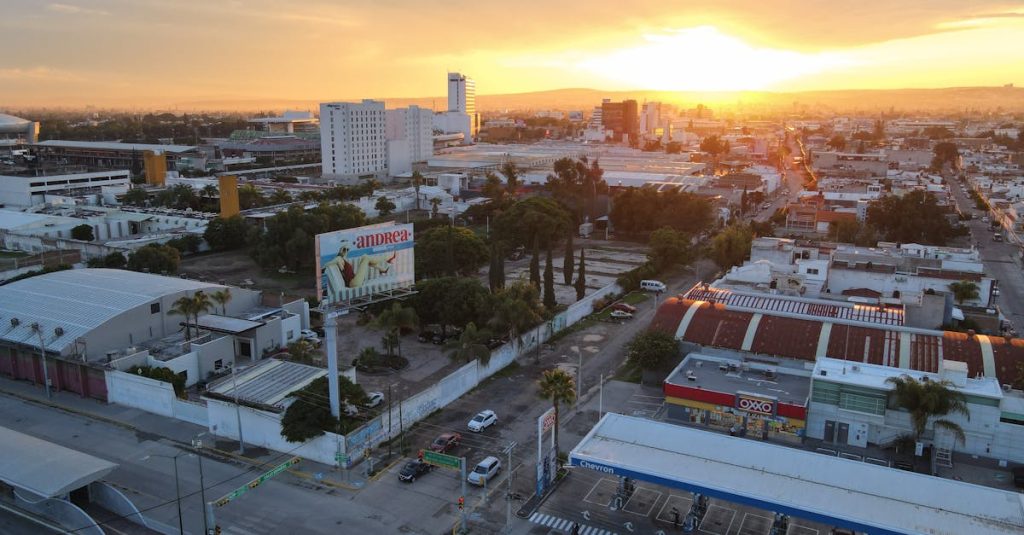
Andreas Gursky explores the residence on Rue du Commandant-Mouchotte in Paris through his lens
A monumental vision of the residence on Rue du Commandant-Mouchotte in Paris by Andreas Gursky Andreas Gursky’s gaze recently fell…
CONTINUER LA LECTUREFocus on expressive faces: revealing the complexity of life experiences and family or social roots.
- A meticulous observation that demonstrates respect for the moment, giving her portraits an almost phenomenal value, capable of awakening memory and emotion in each of her viewers.
- Discover the art of photography through our tips, techniques, and inspiration for capturing unique moments. Whether you’re an amateur or a professional, explore tips to improve your skills and bring your images to life.
- The major themes of Annie Ernaux’s work through photography
- The photographs selected for the exhibition illustrate, as much as literature does, the immense diversity of subjects Ernaux loves to explore. At the heart of her portraits are roots, family, memory, but also the banality and beauty of everyday life. In Aix as in Paris, her images evoke life in its simplest forms, like people encountered on a street or modest interiors, revealing humanity in all its complexity. This artistic choice reflects a desire to highlight the universality of the human experience, while connecting each fragment to roots deeply rooted in collective memory. Photography becomes the medium for an intimate narrative, one that offers a glimpse of the breath of life that constitutes us, both fragile and resilient. Certain photographs evoke a changing society, as evidenced by the evolution of lifestyles or urban landscapes, testifying to a close relationship between the past and the present.
Emblematic Subjects
Family and Memory
Portraits of loved ones or anonymous figures embodying transmission and deep roots.
Urban Daily Life
| Street scenes, moments of anonymous life yet revealing local sociology. | Work and Social Class |
|---|---|
| Images of workers, laborers, or individuals in their professional environments. | The role of emotion in her portraits |
| What distinguishes Ernaux in her works is her ability to convey raw emotion in each captured scene. Photography thus becomes a privileged vector of emotional memory, as if each face or scene had a story to tell. The finesse of her choices of angles, lighting, and framing amplifies this sensitivity, allowing the viewer to reconnect with their own roots or forgotten memories. | A contemporary artistic approach accessible to all |
| If we consider Annie Ernaux’s approach as a hybrid art form, it is part of these new trends of the 21st century, where the intersection of literature, photography, and humanism creates a dialogue. Her humble yet powerful work reveals that beauty lies in the simplicity and sincerity of everyday moments. The power of her portraits, exhibited in Aix, lies in their ability to make our gaze waver, to awaken in each of us a form of recognition of our unifying roots. | Her work is aimed at all audiences, without distinction. It invites collective reflection on individual and collective memory, while maintaining a simplicity that touches the heart. The fusion between her writings and her images becomes a mirror reflecting life as it unfolds, as fragile as it is unwavering. |
Initiatives and resources to explore Annie Ernaux’s work
Visit the exhibition “Extérieurs” in Aix
.
Visit the official page “Annie Ernaux and Photography”
.
Discover her connections with literature through articles on “Voir et Dire”
- . Explore the MEP’s photographic collection in the context of the exchanges between text and image.Participate in workshops or conferences on portraiture with a contemporary approach, linked to visual art.
- FAQ about Annie Ernaux and the magic of photography How does Annie Ernaux integrate photography into her literary work?She uses photography as a means to freeze reality, capture the present moment, and evoke memory through fragments of images and feelings. Photography becomes an additional language to recount daily life.
- What impact do her portraits have on the perception of everyday life in Aix? These portraits highlight the beauty and depth of the ordinary, inviting reflection on our roots and collective memory. They humanize the city by revealing faces and scenes that are often invisible.What techniques does Ernaux favor for her portraits?
- She favors the use of natural light, moving frames, and focusing on expressive faces to capture authentic emotion and preserve the sincerity of the moment. How does Annie Ernaux’s approach fit into the contemporary context?
- Her approach is part of an artistic movement that values simplicity, emotion, and proximity, in line with a renewed perception of memory in modern society.