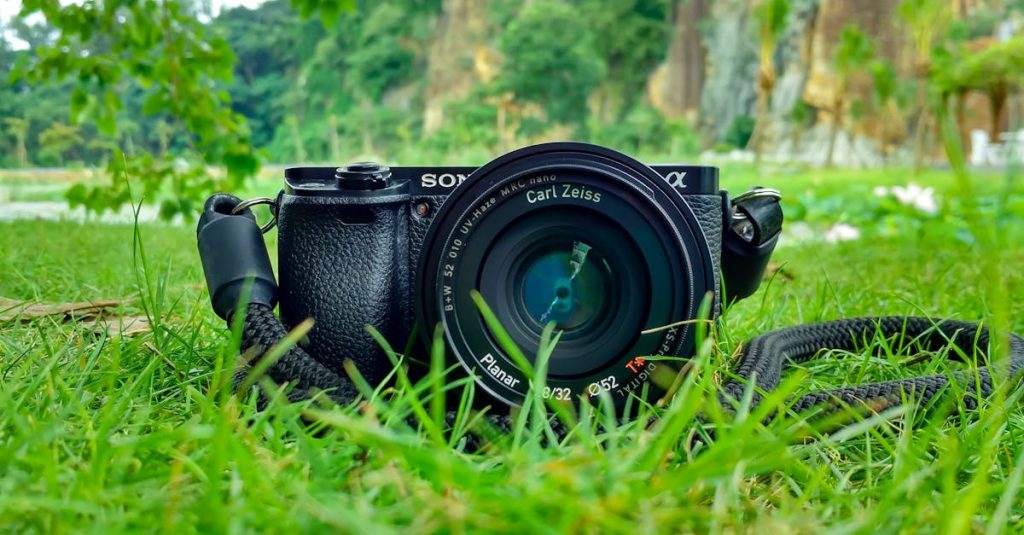
The Pinakothek der Moderne in Munich remains an essential beacon for anyone wishing to explore the dynamics of contemporary art, in which photography plays a central role. This museum, an innovative fusion of art, design, and architecture, offers a unique space for engaging with a medium often considered ephemeral, yet whose expressive scope continues to expand. Between temporary exhibitions and permanent collections, it represents an essential step in understanding how photography fits into the modern narrative, while revealing its complexity and multiple layers of meaning.
It is no coincidence that the Pinakothek der Moderne today positions itself as a place for meetings and debates around major photographic trends. From the practice originating with film to the digital age, its spaces host works by such greats as Nikon, Leica, Hasselblad, and Fujifilm. All these sometimes spectacular figures are shaping the contemporary vision of capturing the moment, while engaging with more emerging artists who are challenging conventions and experimenting with new forms of experimentation, notably by collaborating with digital creators or using cameras like Ricoh or Sony.

LECTURE SUGGÉRÉE
Freddy immortalizes Crécy to overcome the effects of long covid
The long-COVID phenomenon continues to disrupt the lives of many patients around the world, particularly…
LIRE L'ARTICLEThis multidisciplinary journey, tinged with historical and aesthetic reflections, is also aimed at a curious audience, eager to understand how photography is becoming a universal language, capable of telling stories as diverse as the society of tomorrow or the deepest intimacy. The Pinakothek der Moderne thus becomes a stimulating space, where every visitor, amateur or professional, can draw on this wealth of images to understand the challenges of the visual in our constantly changing world, while drawing inspiration from the expressive power of photography.

Biography and influences of a key figure in modern photography exhibited at the Pinakothek
Among the works that adorn the rooms of the Pinakothek der Moderne, those of artists who have left an indelible mark on the history of modern photography occupy a privileged place. Each of these creators has, in their own way, shaped the perception of the medium, by pushing its technical and narrative limits. Their journey, often tinged with daring experimentation, illustrates how photography can reach the height of a work of art in its own right.
Major figures such as Gerhard Richter, iconic in the field of modern art but whose photographic works in abstract slices upset perception, or even Hiroshi Sugimoto, whose philosophy of monochrome photography questions memory and temporality, embody these major influences. Richter, in particular, left behind a colossal body of work, oscillating between realism and abstraction, perfectly illustrating the capacity of photography to navigate between different visions of the world. Sugimoto, for his part, captures the rapid, the silent of time which stops in his series of landscapes or situated shots.

The James Webb telescope captures its first image of an exoplanet
In 2025, the universe still holds many surprises for those who scrutinize its mysteries using cutting-edge technologies. The James Webb…
CONTINUER LA LECTURETheir works demonstrate a profound influence, both in terms of technique and aesthetics, that can be found in various current practices. Their career is also marked by collaborations with camera manufacturers such as Canon, Nikon, and Hasselblad, which shaped their ability to explore light and texture. By exhibiting these iconic figures, the Pinakothek offers its visitors valuable insight into these influences and the significance of their work in the broader artistic context.
Major works of contemporary photography presented at the Pinakothek der Moderne
Each year, the collections of the Pinakothek der Moderne bring together major works of contemporary photography, revealing a diversity of forms and themes. Among these works, some stand out for their visual power or their ability to stimulate reflection on our society. Abstract photographs, particularly those inspired by the techniques of Géraldine Frisch and Magdalena Jetelová, play with our perception by evoking memory and ambiguity. These works, often made with cameras such as Ricoh or Sony, embrace an experimental approach, while questioning the boundary between photography and sculpture. Their often unclear forms leave room for personal and open interpretation.
Another strong trend lies in narrative photography, used to mythologize or denounce. Some exhibitions highlight documentary or politically engaged series, emphasizing the social role of photographers. Between the simplicity of a Muchacha shot and the finesse of a portrait captured with a Leica, these works participate in a form of dialogue between the artist and the viewer.
Type of work
| Examples | Techniques used | Abstract |
|---|---|---|
| Géraldine Frisch, Magdalena Jetelová | Digital manipulation, film, collages | Narrative & documentary |
| Project on urban society, portraits | Digital photography, Leica, Canon | Conceptual |
| Works by Sugimoto, Richter | Monochrome, large-format prints | Discover the art of photography through our tips, tricks, and inspiration. Whether you’re a beginner or a professional photographer, explore techniques to capture unforgettable moments and enhance your perspective on the world. Dialogues and Exchanges: The Impact of Temporary Exhibitions on the Photography Scene |
In 2025, for example, the exhibition focused on experimental photography, which showcased young talents using cameras like Ricoh, experimenting with processes often inspired by vintage photography or the aesthetic of Kodak color. The variety of techniques explored, from analog photography to raw digital images, demonstrates the breaking down of traditional boundaries.
These events also fostered reflection on the role of photography in society, particularly in the context of social media and the instant image. The Pinakothek encourages these exchanges to reverse the passive logic of the viewer, making each visit a participatory experience. It thus invites visitors to ask the question: how does photography influence our perception of reality?
Resources and tools for exploring photography at the Pinakothek and beyond
The photography exhibition at the Pinakothek der Moderne is also enriched by a wide range of educational resources and workshops. Among these, the use of high-quality equipment, such as Leica, Nikon, and Sony cameras, allows visitors to better understand photographic technique, its challenges, and its limitations. The collection also includes works created with vintage equipment, such as Kodak and Hasselblad, illustrating technological evolution.
Workshops and lectures, often organized in collaboration with manufacturers or specialized schools, encourage experimentation with different styles and methods. Discovering specialized books, such as those available in their dedicated bookstore, also allows for a deeper understanding of photographic techniques, history, and criticism. For example, a Clicovia book on food or portrait photography offers a complementary approach.
To delve deeper, several online resources are recommended. Among them, platforms like Clicovia offer books and interactive exhibitions to understand the aesthetic and technical challenges. Regular practice using cameras like a Ricoh or a Fuji, or creative use, experimenting with filters or synthetic media, remains essential to mastering this art.
Tools
Lenses Equipment Examples Cameras
| Experimenting with Different Styles | Leica, Nikon, Sony, Hasselblad | Vintage Equipment |
|---|---|---|
| Discovering the History | Kodak, Muchacha | Software & Editing Software |
| Post-Processing | Adobe Lightroom, Capture One | Frequently Asked Questions (FAQ) |
| How has photography evolved in the modern Pinakothek? | It has transformed from a graphite art to an experimental digital practice, incorporating video, augmented reality, and hybrid technology, while retaining its roots in vintage film photography. | What are the essential cameras for an amateur wanting to explore contemporary photography? |
Cameras like Leica, Nikon, Sony, and Ricoh offer a wide variety of tools for experimentation, ranging from compacts to professional cameras, including the Hasselblad medium format.
- How does the Pinakothek promote the discovery of modern photography? Through its temporary exhibitions, interactive workshops, and documentary resources, the Pinakothek stimulates curiosity and experimentation while highlighting the diversity of current photographic practices.
What themes predominate in the works on display? - The main themes include abstraction, identity, society, landscape, and technique, which are addressed through a variety of styles, from portraiture to experimentalism.
Source: - loeildelaphotographie.com