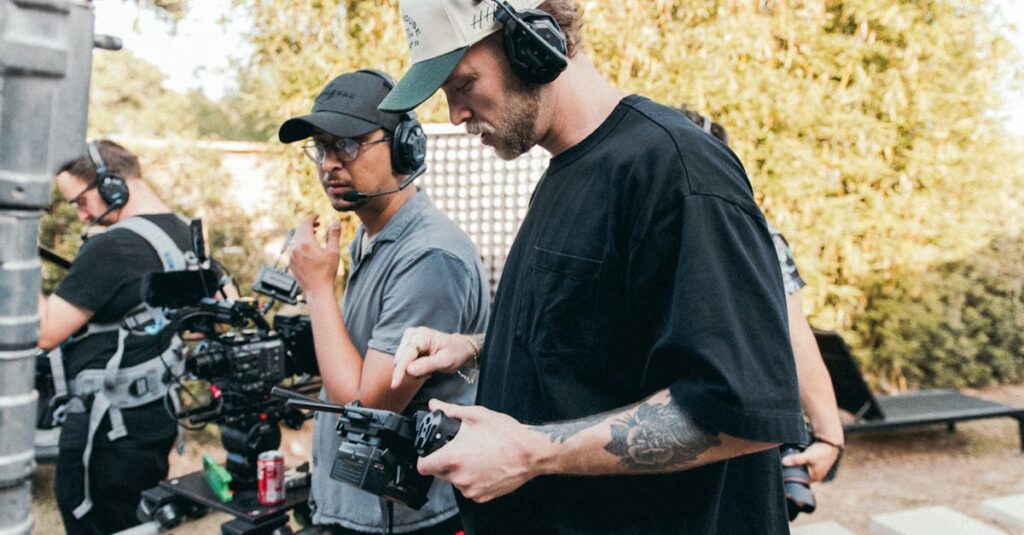
The high-performance mirrorless camera market is undergoing a constant transformation, with models competing in ingenuity to attract demanding videographers and photographers. In 2025, two names dominate the landscape: the Panasonic Lumix S1H and the Sony A7S III. These cameras embody the culmination of years of research, combining cutting-edge technology and ergonomics. While the Lumix S1H stands out for its ability to film in 6K, ideal for cinematic productions with exceptional attention to detail, the Sony A7S III shines in low-light capture and image fluidity, thanks to its 4K video capabilities at 120 fps. Their rivalry crystallizes the expectations of content creators seeking a balance between performance, reliability, and cost. The real question then remains: which of these two machines becomes the ultimate choice for videographers, whether they work in the documentary, livestream, or independent filmmaking fields? The answer comes in a context where every technical detail can make all the difference, revealing the complexity of the choice to be made in a year where technology has never been so advanced.
A tradition of excellence: biographies of the heavyweights of vlogging and professional cinema
Since its inception, the Panasonic Lumix S1H has left behind a colossal legacy in the world of professional cameras. Born from a desire to combine video power with robustness, this range quickly established itself as the preferred tool for filmmakers seeking the flexibility of a mirrorless camera. Its pioneer, the Lumix S1H, embodies a strong vision of the world between realism and picturesqueness, offering an experience where technology becomes an extension of the operator’s gaze. On the other hand, the rise of the Sony A7S III, the logical successor to a renowned lineage, indicates an evolution centered on low-light efficiency, mobility, and fluidity. Their respective histories testify to a common ambition: to allow creators to push the limits of their creativity, while maintaining flawless reliability and compatibility with a multitude of video and photographic equipment. Their catalogs of work, often praised in the independent film and event filming worlds, offer a rich testing ground for precisely analyzing the strengths and weaknesses of each model.

LECTURE SUGGÉRÉE
Fujifilm GFX50R vs Hasselblad X1D: Which medium format should you choose in 2025?
In the world of medium format, the provocative rivalries between renowned manufacturers like Fujifilm and…
LIRE L'ARTICLEKey works illustrating the power of each camera
The Lumix S1H has notably been used for several Netflix productions, thanks to its 6K capabilities combined with exceptional image stabilization. Its suitability for long-duration shoots and its maximum resolutions allow it to capture strikingly realistic images. The Sony A7S III, for its part, has been chosen for exceptional documentaries in low light, particularly in dark or nighttime environments, thanks to its exceptional ISO performance. The series of independent film productions such as this detailed comparison highlights the choices videographers make based on their specific needs. The synergy between their biography and their technology encourages careful consideration before any investment, whether it’s a short shoot or a multi-hour film.
Technical Performance: The Duel of Sensors and Video Features
The technical performance of these two cameras clearly illustrates their strategic positioning. Sensor resolution, dynamic range, and the ability to film at high frame rates are all key factors. The capability to film in 6K at 24p for the Panasonic S1H offers unparalleled flexibility for cropping and post-production, not to mention exceptional image stabilization. Opposite, the Sony A7S III offers a native resolution of 4K at 120 fps, making its images smoother, with an equally impressive dynamic range of 15 stops. In terms of ISO, Sony gives its camera a notable advantage, capable of reaching ISOs up to 409,600 in video mode, a real asset for filming in extreme conditions. This fundamental difference between resolution and sensitivity will profoundly influence the user’s choice depending on their priorities, whether it’s image sharpness or the ability to capture in the dark. Specifications
| Panasonic Lumix S1H | Sony A7S III | Max Resolution |
|---|---|---|
| 6K at 24p | 4K at 120p | Max Frame Rate |
| 60 fps (4K) | 120 fps (4K) | Max ISO (video) |
| 51200 | Sensor | |
| 24.2 MP full-frame | 12.1 MP full-frame | Dynamic Range |
| Up to 14 stops | 15 stops | Design, ergonomics, and stabilization: the science of motion |
A camera isn’t just about its numbers. Handling, durability, and built-in stability play a central role in the success of every shoot. The Panasonic S1H boasts a decidedly professional design, with a sturdy magnesium alloy body and a wide handle, providing a reliable grip during long shooting days. A built-in fan allows for extended use without overheating, but its noise can be annoying in quieter situations. In contrast, the lighter, fanless Sony A7S III prioritizes compact ergonomics for easy mobility, especially when shooting on the go or in confined spaces. With built-in image stabilization, both models ensure stable shooting, but the Sony has a notable advantage in its new “Active Mode” features, which significantly reduce shake for ultra-smooth footage.
Discover the best videographers capturing your precious moments with creativity and expertise. Whether for a wedding, a corporate event, or an artistic project, our professionals offer high-quality videos to immortalize every moment. Explore our videography services tailored to all your needs.

Canon vs Nikon: Why choose the Canon EOS R5 for your professional photos?
Contents Introduction: A Strategic Choice in Professional Photography In the sophisticated world of professional photography, choosing a camera is not…
CONTINUER LA LECTURE
In the world of videographers, battery life and storage capacity often prove to be decisive factors. The Panasonic S1H, equipped with a high-capacity battery, can achieve approximately 2 hours of 4K shooting, which is ideal for long, uninterrupted trips. In contrast, the Sony A7S III, with a lighter battery, offers slightly less battery life, but its optimized power consumption still guarantees several hours of use, especially in combination with a solar panel or additional batteries. In terms of media, the S1H favors the use of standard SDXC cards, which are very affordable, while the A7S III requires more expensive CFexpress cards, especially for shooting at high frame rates at 4K 120fps. From a financial perspective, an objective analysis reveals that, even if the initial cost is comparable, the long-term expenditure on media favors the S1H if cost management is a priority. Compatibility with a multitude of high-tech equipment, including compatible accessories, confirms the strategic value of each model.
Features
| Panasonic Lumix S1H | Sony A7S III | Battery |
|---|---|---|
| High capacity, 2 hours per charge | Lighter, optimal battery life | Storage |
| SDXC UHS-II | CFexpress Type A / SD UHS-II | Media cost (512 GB) |
| $0.33/GB | $2.49/GB (CFexpress) | Purchase price |
| Approximately €3,400 | Approximately €2,900 | The verdict: which factors weigh most in the choice? |
The real challenge lies in the compatibility between each videographer’s profile and the technical advantages.
Photographic expertiseor the ability to film in the dark, for example, naturally point towards the Sony A7S III, which excels in these areas. For long shoots or those requiring high resolution, the power of the Panasonic Lumix S1H in 6K appears to be an undeniable asset. Stability, robustness, and compatibility with professional accessories also tip the scales in favor of the S1H, particularly for demanding productions. However, the Sony’s lightness and mobility offer significant flexibility of use. The cost issue, often crucial for independent or beginner videographers, favors the Sony, especially when compatibility with third-party equipment is taken into account. The final decision therefore remains a personal assessment, depending on the priority given to raw performance or practicality. Accessories, Compatibility, and Extensions: Optimizing Shooting
Both high-tech brands, Panasonic and Sony, offer an extensive ecosystem to expand the capabilities of their cameras. The modularity of the equipment, with lenses like the Fujifilm X-T4 or stabilizers, allows the camera to be adapted to all types of projects. Compatibility with accessories such as cages, gimbals, and ND filters is essential to optimize the final result. At Panasonic, the L-mount offers a wide selection of lenses, including the Sigma Art and Lumix S PRO ranges, providing great diversity in creativity. For the Sony A7S III, the CFexpress ecosystem and professional accessories like cage rigs and external monitors facilitate the creation of complex shots or in difficult conditions. The key: investing in equipment that allows you to get the most out of each camera, while respecting their compatibility to avoid the need for adapters or unreliable solutions.
Total Cost of Ownership: Making the Right Choice Without Breaking the Bank Purchase price is one step, but total cost of ownership also includes battery life, media compatibility, and maintenance. Thecost comparison
shows that the Panasonic S1H, while more expensive upfront, can prove more cost-effective in the long run if the media budget is controlled. The durability of the components, the availability of spare parts, and compatibility with the professional equipment range ensure reliable use over time. For Sony, the high cost of CFexpress media must be factored into the overall calculation if the production requires a large number of shots or intensive use of RAW. The choice also depends on the volume of production, frequency of use, and the ability to invest in a suitable infrastructure to fully utilize each device.
Videographers face the challenge of choosing: a solution tailored to each project It seemed obvious that each camera, with its strengths and limitations, meets clearly defined profiles. Those who prioritize photography and low-light shooting will naturally lean toward the Sony A7S III, which is lighter and more versatile for mobility. Conversely, for shoots requiring high resolution and stability, the Panasonic Lumix S1H stands out as the benchmark. The decision must also take into account cost management, compatibility with third-party equipment, and durability in outdoor conditions. In 2025, the move upmarket of both brands continues to evolve these choices, offering videographers previously unimagined creative freedom. The combination of their biography and cutting-edge technology places these cameras at the top of the market, ready to meet all the challenges of modern visual storytelling. Frequently Asked Questions (FAQ)
What is the main difference between the Panasonic Lumix S1H and the Sony A7S III?
The key difference lies in the video resolution: 6K for the S1H versus 4K at 120 fps for the A7S III, which affects post-production flexibility and image fluidity. Which of the two models is best suited for low light? The Sony A7S III excels in this respect, with an ISO capacity of up to 409,600, making this camera ideal for shooting at night or in dark environments.
Can these cameras be used for professional photography?
- Absolutely. The Panasonic Lumix S1H offers a resolution of 24.2 MP, while the Sony A7S III offers 12.1 MP, but with dynamic handling and the ability to capture in extreme conditions, allowing for versatile use. What accessories are essential to maximize performance? Quality lenses, stabilizers, monopods, power cables, external monitors, and extra batteries are recommended to maximize the potential of each camera.
- How much should you budget for the complete kit? Taking into account the purchase of the camera, high-performance media, and accessories, the total can range from €4,500 to €7,000, depending on the model and optional extras.