A Sub-Prefect’s Perspective: Passing on a Passion for Photography to Children to Rediscover the Art of Time
In a context where modern society often weighs heavily on the perception of rhythm and the present moment, a sub-prefect from 2025 decides to use his love of photography as a vehicle for education and sharing. Committed to an authentic approach, he invites young people to discover the practice of capturing the moment, whether with an old Polaroid or a state-of-the-art digital camera like a Leica or a Sony. Through this experience, he hopes to convey to them the importance of taking time, observing themselves, and appreciating every second, often diluted in the frenetic flow of daily life. The project goes far beyond a simple hobby: it becomes a true life lesson, an invitation to slow down to better marvel. With the challenge of confronting tradition and modernity as a backdrop, this initiative renews the way in which the civil service can connect with young people, highlighting fundamental values in the digital age. The teaching is done through images, a universal language that opens unexpected doors to artistic awakening and an awareness of the passing of time.
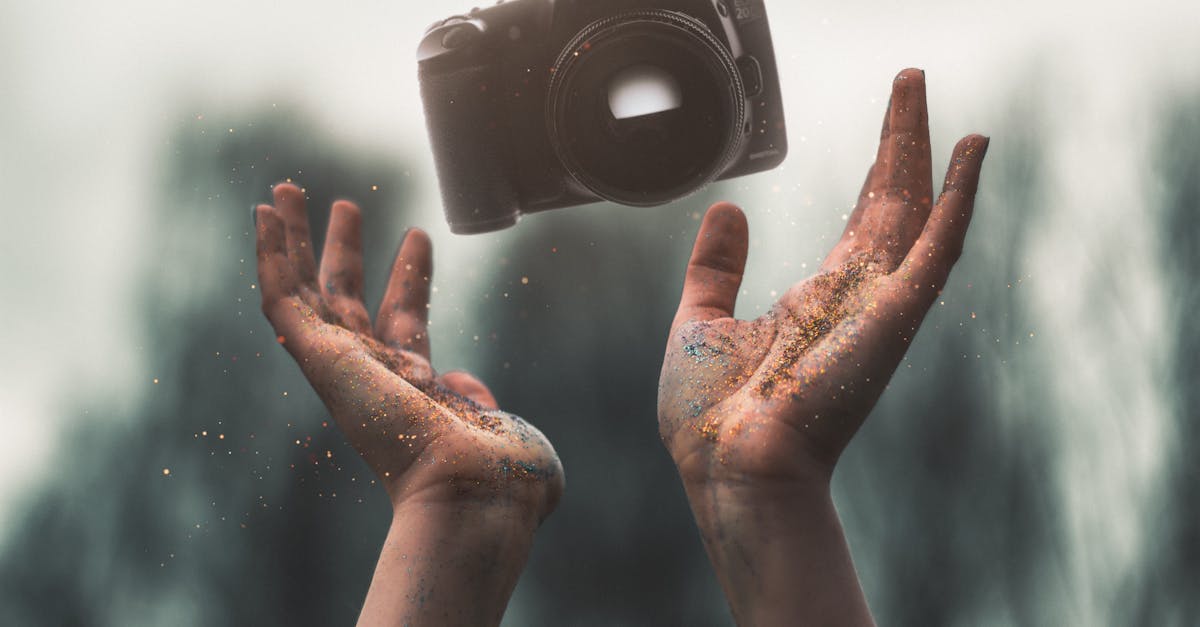
Biography and career: a sub-prefect passionate about photography and sharing his knowledge
With an atypical career path, this sub-prefect is not only an administrator in charge of territories. His love for photography dates back to his student years, when he began exploring different brands such as Fujifilm, Olympus, and Pentax, appreciating the versatility of each system. His interest extends beyond simply taking images: he sees photography as a way to capture the fast, immortalize the ephemeral, and give meaning to the passage of time. His personal work reflects this committed quest, oscillating between realism and dream, between spontaneity and thoughtful composition. Over the years, he has left behind a colossal body of work, composed of animal, urban, and landscape portraits, often illuminated by natural light, whether at dawn or dusk. The equipment he uses is no small matter for him: Nikon, Canon, but also rarer mounts like Leica or Kodak, all contribute to revealing his artistic depth. Through his exhibitions and workshops, he shares his vision of the world, somewhere between an ambitious exploration of reality and a tribute to the beauty of the passing of time. His educational approach is rooted in a desire to make photography accessible, offering workshops for children in local or school settings, as evidenced by his partnerships with various schools and cultural associations. By incorporating a variety of media, he aims to instill in each young person the desire to discover their own perspective, while relearning to value every moment of everyday life.

LECTURE SUGGÉRÉE
The James Webb telescope captures its first image of an exoplanet
In 2025, the universe still holds many surprises for those who scrutinize its mysteries using…
LIRE L'ARTICLE
Simplified pedagogy: approaching children’s photography as a fun and educational experience
Finally, photography for children becomes a true learning platform, where simplicity and interactivity preside over discussions. Drawing on various resources, such as those offered by the educational photography teaching guide, or by integrating cameras from brands as varied as Polaroid, GoPro, and Fujifilm, the approach favors role-playing rather than abstract theory. The workshops are built around lists of principles to follow, for example:
- Observe light and its changes at different times of day.
- Play with contrasts: urban vs. nature, indoors vs. outdoors.
- Capture the emotion of a moment rather than technical perfection.
- Experiment with different cameras, from the classic Nikon F to the small GoPro for sports.
- Discover simple techniques such as focusing or framing before tackling more advanced concepts. The educational program also includes digital resources, such as tours and workshops in the Montfaucon-en-Velay region.
, as well as temporary exhibitions that encourage intergenerational exchange. Mastering time, a key variable in the photographic eye, is also developed through breathing and patience exercises, to learn to wait for the right light or the right subject. The teaching is gentle and progressive, with immediate practical application so that each child can feel the magic of capturing a precious moment. Reflection on images is also essential: how can light, composition, or even expression make all the difference? Understanding these elements allows for a deeper experience. Finally, the spotlight on artists such as Cartier-Bresson and Ansel Adams fuels reflection and inspires young talents, combining classics with innovations such as recent digital photography, dominated by easy-to-use cameras like the Leica or the Nikon D5. Discover the art of photography through useful tips, innovative techniques, and creative inspiration for capturing unforgettable moments with your camera. Photography as a means of educating wonder and respect for timeOver the course of the encounters, the practice becomes a true pedagogy of observation, where we learn to look in order to better understand. Photography goes beyond simple technique to become a philosophy of time, a gaze fixed on the fragile moment. The role of the sub-prefect goes beyond the administrative sphere: he encourages young people to appreciate the value of time, to listen to the murmur of the hours passing by while developing their sensitivity to the details of everyday life. The changing light constitutes a constant challenge, a call for patience and humility. The photographic practice also conveys an environmental dimension, by showing the beauty of local landscapes or wildlife, evoking the importance of preserving a fragile balance. During outdoor workshops, he emphasizes the need to respect nature, just as he advocates responsible time management: knowing when to act, waiting for the right moment, contemplating a moment without rushing it. The passion for the hobby thus becomes a powerful educational tool, capable of teaching inner peace, self-control, and respect for the world around us. The approach is also inspired by the great figures of photography, who were able to capture the magic of time in a few lasting images. At each session, he encourages children to develop their critical eye, while conveying to them the idea that every second is precious, to be preserved and cherished.
Pamproux: an artistic fusion between painting and photography at the Émergence gallery
A New Dimension of Visual Art: The Fusion of Painting and Photography at the Émergence de Pamproux Gallery Located in…
CONTINUER LA LECTURE
How to get started in photography with children?
Start with simple cameras, like a Polaroid or a small Canon compact, and focus on fun and immediate practice.
Which cameras facilitate learning for young people?
- Easy-to-use cameras like Fujifilm Instax or Olympus Tough, which allow for intuitive handling and encourage creativity. How can we teach children about the ephemerality of time?
- Through workshops exploring light, patience, and spontaneity, telling them stories related to the photographs captured. Which artists can inspire us to learn to observe?
- Legends like Cartier-Bresson or Ansel Adams, whose sense of timing and light remain essential references. What types of outings should we prioritize to develop children’s eye?
- Walks in nature or in the city, where they can experiment with different framing and textures, using a variety of cameras, including GoPro technology for action or simple digital. Source:
- www.ouest-france.fr