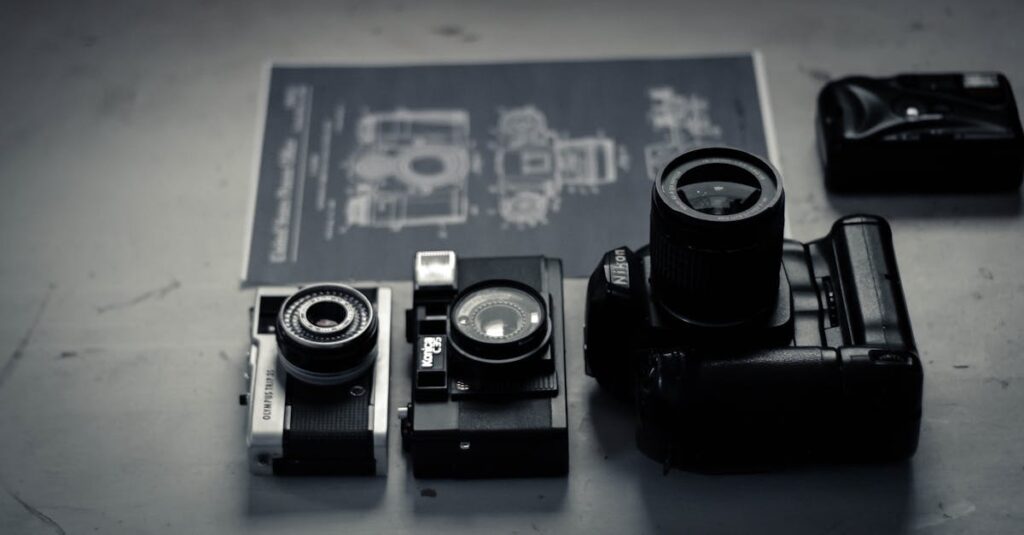
An in-depth comparison between Fujifilm GFX50S II and Canon EOS R5 for demanding photographers
Faced with the incessant evolution of hybrid cameras, the question of the best choice for professionals remains central. The Fujifilm GFX50S II, with its medium-format sensor, presents itself as a work of technical art, providing extraordinary image quality. Alongside it, the Canon EOS R5, emblem of full format, combines speed, versatility and advanced technological innovations. In 2025, these two models embody the pinnacle of modern photography, each attracting a distinct audience. Landscape or portrait photographers may favor the subtlety of the GFX50S II, while those working in sports or street photography will lean towards the speed and responsiveness of the R5.
The technical performances, as well as their ergonomics and their creative universe, will be analyzed in depth to enlighten those who, tomorrow, will consider one or the other as their favorite companion. Between image quality, shooting fluidity, or even compatibility with the range of lenses, each choice becomes a crucial step in asserting your artistic vision. In this world where every detail counts, a clear understanding of the strengths and weaknesses of these two devices seems essential to avoid being drawn in by overly beautiful promises or impressive figures, but without real consistency in the current professional context.

LECTURE SUGGÉRÉE
Sony A7 IV vs Canon EOS R6: Why choose one over the other?
A Battle of Giants for Photography Enthusiasts and Professionals in 2025 In the ever-evolving world…
LIRE L'ARTICLE
Technical biography and design of the Fujifilm GFX50S II and the Canon EOS R5: a contrast of elegance and innovation
The Fujifilm GFX50S II, heir to a long tradition in the medium-format field, stands out with its robust and ergonomic body, designed to withstand extreme conditions while providing a natural grip. Its 51.4-megapixel medium-format sensor, in a 43.8 x 32.9 mm format, guarantees finesse beyond all expectations, allowing portraits to display a depth of detail and particularly refined color rendering. Built-in mechanical stabilization, coupled with a precise focusing system, makes this model a benchmark for studio or landscape photography requiring ultimate precision.
For its part, the Canon EOS R5 offers a more compact design, combining lightness and performance. Its 45-megapixel full-frame sensor proves incredibly effective in a variety of conditions, thanks in particular to its Dual Pixel CMOS AF II autofocus, which guarantees remarkable speed and precision. The sleek lines of the EOS R5 promote intuitive handling, ideal for shooting in unexpected situations. Its 8-axis stabilization system, combined with a 12 fps burst rate, makes it a preferred camera for dynamic or sports photography.
| Technical Specifications | Fujifilm GFX50S II | Canon EOS R5 |
|---|---|---|
| Sensor | 51.4 MP Medium Format | 45 MP Full Frame |
| Stabilization | Integrated mechanical | 8-axis (sync with lens) |
| Weight | 900 g | 738 g |
| Design | Robust body, balanced dimensions | More compact, lighter |
| Autofocus system | PD focus, multiple zones | Dual Pixel CMOS AF II |
This contrast in design directly reflects their target audiences. The GFX50S II, with its balanced construction, remains ideal for static shoots, while the more agile R5 is perfect for photography on the move or in dynamic situations. The difference in ergonomics becomes a key parameter depending on the intended use, but also when considering a long-term investment in a range of compatible lenses.

Panasonic Lumix S1R vs Sony A7R IV: Which One Should You Choose for Your Photos?
An unmissable showdown for capturing perfection: Panasonic Lumix S1R vs. Sony A7R IV While the camera market continues to evolve…
CONTINUER LA LECTUREPerformance in practice: image quality, speed, and reliability
The number one criterion for any professional remains the ability to deliver images of impeccable quality. The Fujifilm GFX50S II excels in faithful color reproduction and richness of detail, thanks in particular to its superior pixel density. Its ability to capture light and reproduce the subtle nuances of the color palette allows for portraits with striking expression or landscapes that amaze with their visual depth. By comparison, the Canon EOS R5, with its 45 megapixels, offers remarkable image fidelity while being able to react extremely quickly. Its 12 frames per second burst rate and precise autofocus give it an advantage in sports and documentary photography. Its rapid response, coupled with proven reliability in handling unpredictable situations, makes it an ideal tool for street photography in fast-moving urban environments or fast-paced action at events.
Image Quality:
- The GFX50S II scores points for its sharpness and color management, ideal for portraits and landscapes. Shooting Speed:
- The R5 outperforms the GFX with its 12 fps rate, well-suited to sports photography. Autofocus Responsiveness:
- Dual Pixel for the R5, Multi-Zone for the GFX. Sensor:
- The GFX’s large format unit offers better brightness and contrast management. To further this comparison, practical tests and sample images show that while image quality is more pronounced with the Fujifilm (approaching that of a high-end Hasselblad or Sigma), speed performance still favors the Canon in most reportage or action situations. More information and detailed analyses can be found at cameradecision.com.
Choice of Focal Length, Compatibility, and Lens Ecosystems: A Decisive Element for the Professional UserThe vast universe of available lenses weighs heavily in the balance when making an informed choice. The Fujifilm GFX50S II benefits from a range of medium format lenses, renowned for their exceptional optical quality, particularly in portrait and landscape photography requiring finely distinguished details. Compatibility with the ever-expanding GF range offers a range of focal lengths from 23mm to 110mm, allowing for advanced customization. The Canon EOS R5, for its part, relies on the RF ecosystem, which joins an impressive series of high-end lenses. Compatibility with lenses such as the RF 24-70mm f/2.8 or RF 70-200mm f/2.8 offers flexibility that will be appreciated by reportage and nature photographers. Regardless of the camera chosen, it’s clear that the availability, diversity, and quality of lenses play a major role.
Lens Ecosystem
Fujifilm GFX
Canon EOS R
| Focal Length Range | GF 23-110mm, specialized add-ons | RF 24-70mm, 70-200mm, other high-quality lenses |
|---|---|---|
| Optical Quality | Excellent, very well-suited to portraits and landscapes | High-performance, ideal for reportage and nature photography |
| Expanding options | Specialized lenses in development | Wide selection of partnerships with Sigma, Tamron, etc. |
| Lens prices | Positioned at the high end, but justified by the quality | More varied, offering excellent value for money |
| A clear understanding of this lens diversity, combined with an analysis of budget and usage, allows photographers to make an investment that will meet their long-term expectations. Compatibility is also a factor that should not be overlooked, especially if a professional already owns specific equipment or wishes to build a cohesive ecosystem. | Practical use: video performance, ergonomics, and other key features | In a world where versatility is often required, the ability to also produce quality videos has become essential. The Fujifilm GFX50S II, generally considered a camera primarily dedicated to photography, offers more limited video capabilities, with a maximum resolution of 8K at 30p, ideal for artistic content or polished post-production sessions. |
The Canon EOS R5, on the other hand, does not neglect this aspect and takes video to another dimension. With its 8K and 4K capabilities up to 120 fps, and its various formats supporting stabilization and Dolby Vision, it can satisfy both professional videographers and photographers seeking cinematic images. The ergonomic grips, tilting screen, and intuitive menu control make the EOS R5 extremely easy to use for extended sessions or in complex environments.
Video performance:
8K for the GFX, up to 8K/4K for the R5
Battery life:
- Better for the Canon thanks to its high-capacity batteries Ergonomics:
- More intuitive for the R5, more robust for the GFX Additional features:
- Wi-Fi, Bluetooth, GPS compatibility Overall cost and investment: an essential consideration for professionals
- Beyond technical performance, the question of total cost is a decisive factor. The initial purchase price, but also the lifespan and the cost of maintaining or upgrading the lens ecosystem, play a major role in financial strategy. The Fujifilm GFX50S II, while its price may seem high—generally around €5,500—is justified by its exceptional image quality and medium-format specialization. The Canon EOS R5, often priced at around €4,500, offers greater flexibility for versatile uses, while remaining ambitious in terms of investment. Economic Criteria
Fujifilm GFX50S II
Canon EOS R5
Initial Purchase
| Approximately €5,500 | Approximately €4,500 | Specialty Lenses |
|---|---|---|
| High-End Positioning | Varied, with Good Value | Maintenance and Upgrades |
| High-End, High Cost but Durable | Moderate, with Regular Equipment Upgrades | Long-Term Investment |
| More Specialized, but Essential for Portraits and Landscapes | More General, Ideal for Everyday Photography and Reportage | This financial sizing also reveals the need to adapt your budget to your artistic or commercial ambitions, while taking into account the possibilities for advancement in competitive sectors where Nikon, Sony, Leica, and Hasselblad also offer innovative solutions. |
| A Selection of Complementary Equipment to Optimize Use | Once the camera has been chosen, the quest for perfection also involves the integration of accessories and complementary equipment. Stabilizing supports, carrying bags, filters, and even post-processing software like Capture One or Adobe Lightroom have a direct impact on the final quality of the works. | The choice of memory, transfer speed, and compatibility with flashes or microphones expand a professional’s creative palette. High-end processing labs or mobile studios further enrich artistic production, particularly for projects requiring high precision or high-speed shooting. |
Discover our comparison of the best cameras on the market. Analyze features, performance, and price to choose the camera that best suits your needs. Whether you’re an amateur or a professional, find the ideal camera to immortalize your precious moments.
Frequently asked questions about the Fujifilm GFX50S II vs. Canon EOS R5
What are the main advantages of the Fujifilm GFX50S II?
The exceptional image quality, color management, and depth of detail make it a top choice for portrait and landscape photography in the studio or outdoors.

Are both cameras compatible with existing lenses?
- The GFX fits into the GF ecosystem, while the R5 leverages the RF range; each benefits from a wide selection of lenses, with enhanced compatibility and continued development. When it comes to use while traveling or in harsh environments, which is preferable?
- The more robust Fujifilm is ideal for demanding situations, but its weight and size must be considered. The lighter Canon facilitates greater mobility. What is the best option in 2025 for a moderate budget?
- The Canon EOS R5 offers better value for money if you prioritize versatility and video, while the GFX50S II remains a high-end investment for specific projects.


