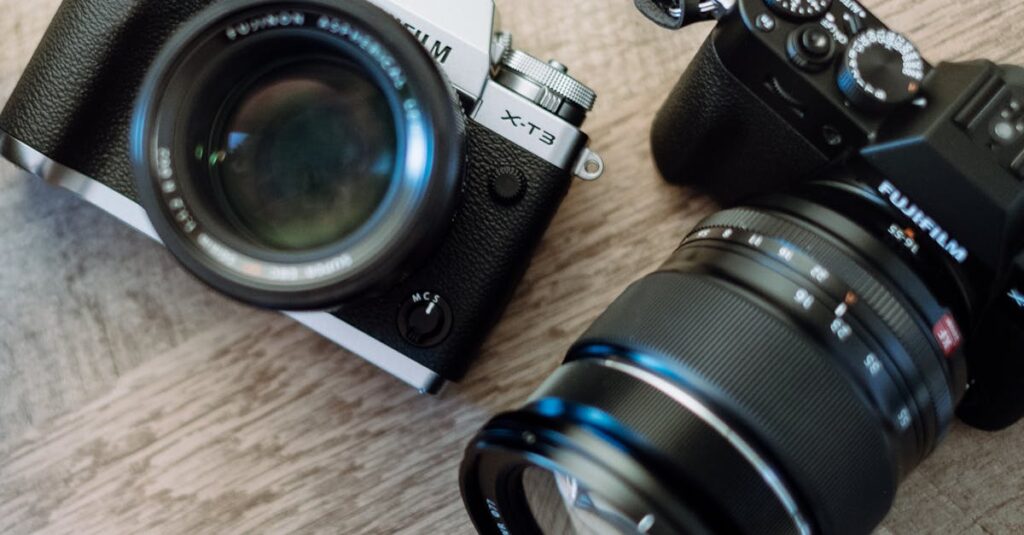
Technological Foundations: Comparing the Design and Ergonomics of the Panasonic Lumix GH6 and the Sony A7 IV
When considering a camera for your photographic adventure, design and ergonomics play a central role. The Panasonic Lumix GH6 and the Sony A7 IV, both emblems of mirrorless technology, embody different design philosophies. Durability, weight, handling, and control layout greatly influence their use in the field, where every detail often counts as much as image quality itself. The GH6, a legacy of a long Lumix tradition, stands out with its rugged design, built to withstand the hazards of outdoor adventure. Its aluminum alloy body, combined with partial sealing against dust and moisture, gives it a durability appreciated by nature photographers. For its part, the Sony A7 IV, also designed for mobility, favors modern, compact ergonomics, while offering a firm grip thanks to a well-balanced lens. Its minimalist design promotes ease of transport, but the layout of its buttons, often more numerous, requires getting used to quickly jumping from one setting to another. The fundamental difference lies in their approach: the GH6 values solidity and customization, with a control mode equivalent to that of an SLR camera, while the Sony prioritizes lightness and ease of use, without sacrificing technical performance. The selection therefore depends on the context of the expedition: for an arduous mountain trek or a forest expedition, the GH6 can withstand extreme conditions; for an urban adventure or light travel, the Sony A7 IV will reassure with its ease of handling.
A closer look reveals that the layout of the controls also influences execution speed. The Panasonic relies on a greater number of programmable buttons, facilitating instant access to key functions such as focus and white balance. Its swivel screen, calibrated for use at height, and its wide electronic viewfinder allow for clear viewing even in bright light. The Sony, on the other hand, has a high-resolution integrated viewfinder, but its less swivel screen sometimes requires adaptation for shooting from difficult angles. For example, when shooting in a dense forest or on a steep mountaintop, the ease of adjustment and robustness of the cameras can mean the difference between a successful capture and a missed opportunity. A detailed comparison of their materials and design shows that each has a different vision of what a camera should offer in demanding environments, reinforcing the need to define priorities before making a final choice. The versatility of a piece of equipment is also measured by its compatibility with a wide range of lenses and accessories, a point in which the Sony A7 IV, with its E-mount system, is particularly advantageous. On the other hand, the GH6, with its compatibility options and customization options, will appeal to those seeking a combination of durability and adaptability.

LECTURE SUGGÉRÉE
Canon: Why choose the PowerShot G5 X Mark II over the Sony RX100 VII?
For several years, the silent war between compact camera manufacturers has raged on the market,…
LIRE L'ARTICLEImage quality and video performance: obstacle or opportunity when choosing a camera?
The ultimate goal of any photographic adventure is image quality, whether captured in stills or video. Both the Panasonic Lumix GH6 and the Sony A7 IV utilize cutting-edge technology, but their approach and target audience often differ. The GH6, originally designed for videographers, features a 25.2-megapixel Four Thirds sensor optimized for capturing moving images with particularly effective built-in stabilization. Its Venus Engine offers impressive image processing capabilities, with high-sensitivity noise reduction and precise color fidelity, even in challenging conditions. 4K video at 120 fps, without cropping, becomes a no-brainer for those who want to capture the moment in high resolution, or create spectacular slow-motion sequences, highly appreciated in the visual narration of an adventure. Conversely, the Sony A7 IV, with its 33-megapixel full-frame sensor, positions itself as a master of still photography, while also being an excellent cameraman. Its BIONZ XR-based image processing produces very rich output, with excellent low-light performance and remarkable dynamism. The ability to capture subtle details, coupled with fine-tuned automatic management, produces images of unprecedented precision. The major difference lies in practicality: for video, the GH6 is ideal, thanks to its professional color profiles and recording options. For pure photography, the Sony A7 IV’s high definition and low-light control offer a notable advantage. Specifications
| Panasonic Lumix GH6 | Sony A7 IV | Sensor |
|---|---|---|
| Four Thirds 25.2 MP | Full-frame 33 MP | Stabilization |
| 5-axis in-body | 5-axis in-body | Video Recording |
| 4K 120 fps, uncropped | 4K 60 fps, cropped | Autofocus |
| DLMF, phase detection | Real-time AF, Advanced AI | Based on this technology, it becomes clear that each camera excels in its own area. The ability to capture the essence of a scene, whether still or moving, differs depending on the angle chosen. The decision should be based on the nature of your next adventure: if the goal is to document an expedition in an extreme environment, the GH6 will offer increased flexibility and proven reliability. Conversely, for an exploration where photography is a priority, the details provided by the Sony A7 IV will make all the difference. |
Autofocus, stabilization, and speed of execution: the keys to performance in difficult terrain
In the context of photographic adventures, every second counts, especially when the subject is moving or when the environment is changing. The performance of cameras in terms of autofocus and stabilization is often the determining factor. The Panasonic Lumix GH6 pushes the logic of integrated stabilization to its paroxysm with a 5-axis system that often proves more effective for tracking a moving subject or for avoiding any jitters when shooting handheld. Its contrast-detection autofocus, complemented by phase detection, offers impressive responsiveness, especially when faced with moving or rapidly changing subjects. On the other hand, the Sony A7 IV, powered by the real-time facial and eye recognition system thanks to advanced AI, allows for surgically precise focusing, even in difficult conditions. Its speed of execution, with almost instantaneous automatic autofocus, allows you to capture the decisive moment without hesitation. But beyond autofocus, the response speed in terms of image refresh, frame rate, and overall responsiveness greatly influences the ability to photograph a wild animal or capture a fleeting moment in the great outdoors.
Criteria

Nikon Z50 vs Canon EOS M50: Which Camera Should You Choose for Amateur Photography?
The hybrid camera market for amateur photography in 2025 is more dynamic than ever, with a veritable ballet of giants…
CONTINUER LA LECTURE| Panasonic Lumix GH6 | Sony A7 IV | Autofocus |
|---|---|---|
| Contrast + phase detection | Real-time tracking, advanced AI | Stabilization |
| 5-axis, integrated | 5-axis, integrated | Response speed |
| Fast, but slightly less instantaneous | Ultra-fast, exemplary responsiveness | The Sony A7 IV appears to excel in scenarios where precision and speed are crucial, particularly for wildlife or sports action. However, the GH6, thanks to its stabilization innovations, becomes a valuable ally for moving images, ensuring optimal sharpness even in low-light conditions or during long exposures. The synergy between autofocus and stabilization forges a platform where the likelihood of missing a moment is minimal. Both cameras, constantly evolving technologically, also offer complementary options allowing adventurers to choose according to their specific environment or photographic style. |
Adaptability to extreme conditions: durability and battery life
The ability to adapt and withstand natural hazards is essential for a successful photographic adventure. The Panasonic Lumix GH6 has designed its body with durability in mind, with a reinforced casing capable of withstanding dust, humidity, and temperature variations. Its battery life, often a disadvantage on many portable devices, amounts to approximately 350 shots per charge, a respectable value for an extended session in difficult terrain. Compatibility with secondary batteries or the ability to power the camera via external sources adds an additional advantage in extended expeditions. On the other hand, the lighter Sony A7 IV focuses on efficient power consumption management, with a battery life exceeding 600 shots. Its magnesium alloy body ensures similar resistance, while allowing easier transport in a backpack or belt. The logic of a camera for the adventurer remains that of reliability: is it able to withstand and continue to function, even in extreme conditions? The answer must also include ease of battery replacement and the robustness of the internal components.
Discover our complete camera comparison guide. Evaluate the best options on the market, compare features, performance, and prices to choose the ideal camera for your needs. Whether you’re a photography enthusiast or a professional videographer, find the perfect device to capture your precious moments.
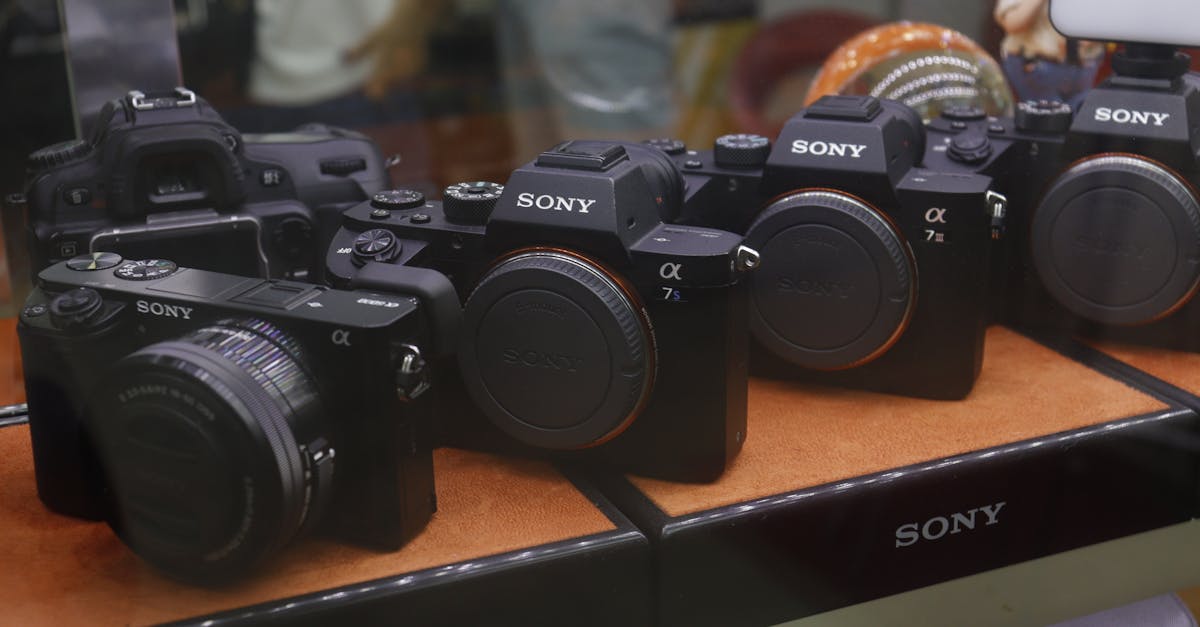
A clear interface and intuitive handling are essential for capturing fleeting moments during an expedition. The Panasonic Lumix GH6, true to its reputation, offers a highly ergonomic menu layout. Its customizable interface allows the user to configure its buttons according to their preferences, which is a decisive advantage when speed is vital. Its swiveling screen, with a high-definition display, facilitates viewing from different angles, a real plus when shooting in varied environments. Sony, meanwhile, offers ergonomics designed for simplicity, with a smart menu grouping key features. Its touchscreen, although less swiveling, remains readable and responsive, simplifying navigation for those who prioritize lightness and speed. The big difference lies in the philosophy: for an experienced photographer or a professional on the go, customization options can save precious time; for an amateur or occasional traveler, ease of use will be a key criterion. Key Features
Panasonic Lumix GH6
| Sony A7 IV | Interface | Customizable menus, touchscreen, swivel |
|---|---|---|
| Intuitive system, simplified menus | Screen | Swivel, high definition |
| Touchscreen, fixed or tiltable depending on the model | Handling | Robust and modular |
| Compact, minimalist ergonomics | In a context where every second counts to immortalize an exceptional moment, this ease of use becomes crucial. The ability to quickly adjust settings without losing precision offers a strategic advantage during wild adventures or in hostile environments. | Accessory integration and compatibility: a creativity booster |
A large part of the photographic experience lies in the ability to adapt your equipment to various situations thanks to extensive compatibility with accessories and lenses. The Panasonic Lumix GH6, equipped with a Micro Four Thirds system, benefits from a vast catalog of lenses, flashes, and other tools for photography or videography. This compatibility allows you to explore different focal lengths without sacrificing image quality or focusing speed. The mount system should also ensure easy integration with professional accessories, particularly in terms of stabilization or filtering. Stability and fluidity of use are thus guaranteed during long sequences or in changing environments. Conversely, the Sony A7 IV, with its E-mount, benefits from a very extensive ecosystem, including high-precision lenses and advanced electronic accessories. Compatibility with microphones, stabilizers, or filters often determines their effectiveness in unpredictable conditions, where creativity must quickly adapt to the environment. For demanding users, this compatibility encourages investing in a range of lenses and peripherals to cover as many scenarios as possible.
Discover our camera comparison tool to help you choose the ideal model for your needs. Analyze the features, performance, and prices of the latest cameras on the market to make the best choice.
Connectivity and sharing: the era of instant photography
Panasonic Lumix GH6
Sony A7 IV
| Connectivity | Wi-Fi, Bluetooth, Live Streaming | Wi-Fi, Bluetooth, Seamless Mobile Connectivity |
|---|---|---|
| App | Centralized Management, Fast Transfer | Remote Control, Live Viewing |
| Instant Sharing | Easy Video and Photo Capture | Sharing via Apps and Social Media |
| In a world where every moment can travel the world in seconds, mastering connectivity is becoming a fundamental issue. The ability to share adventures in high resolution, without delay, radically transforms the experience of travelers and nomadic photographers, allowing them to stay connected with their loved ones or followers at the very moment they capture a unique moment. | Overall Cost: Investment or Optimization for a Successful Photography Adventure | The financial aspect is often a sticking point in a photography equipment purchasing decision, particularly in the context of an investment for an adventure. The price range for the Panasonic Lumix GH6 is generally around €2,200, reflecting its professional capabilities, particularly for video. Its price can be justified by its robustness, stabilization, and advanced features. The Sony A7 IV, priced around €2,500, offers a wider range, with varied lens options and compatibility with numerous accessories, often justifying the difference. However, the issue also lies in the equipment’s durability and versatility, which can make certain models more cost-effective in the long run. Investing in a platform with a broad ecosystem of lenses and accessories is often a strategy to optimize your spending while maintaining high creative potential. For an adventure photography specialist, the cost-benefit ratio must be established based on the style, uses, and technical requirements of each trip. |
Financial Criteria
Panasonic Lumix GH6
Sony A7 IV
| Base Price | ≈ €2,200 | ≈ €2,500 |
|---|---|---|
| Accessory Compatibility | Extensive Micro Four Thirds Ecosystem | Complete SONY E-mount Ecosystem |
| Long-Term Profitability | Strong, with modular accessories | Optimal for versatility and growth |
| FAQ: Key Questions When Choosing Between the Panasonic Lumix GH6 and the Sony A7 IV | Is the Panasonic Lumix GH6 better for video than the Sony A7 IV? | Absolutely. Thanks to its 4K capabilities at 120 fps, advanced color profiles, and stabilization options, it is designed for the demanding videographer. |
Which battery life should you choose for a long trip?
- The Sony A7 IV, with over 600 shots per charge, offers better battery life, which is an advantage on extended expeditions without frequent recharging. Are both cameras suitable for outdoor photography?
- Yes, both feature rugged construction, but the GH6 is more specifically designed to withstand the extreme conditions of outdoor adventures or harsh environments. Which is the best choice for a traveling amateur photographer?
- The Sony A7 IV, with its lightness, ease of use, and rich ecosystem, is often more suitable for those who prioritize mobility. Does accessory compatibility really influence the choice?
- A lot, because it allows you to adapt your equipment to different scenarios, whether it involves stabilization, lighting, or specialized lenses.