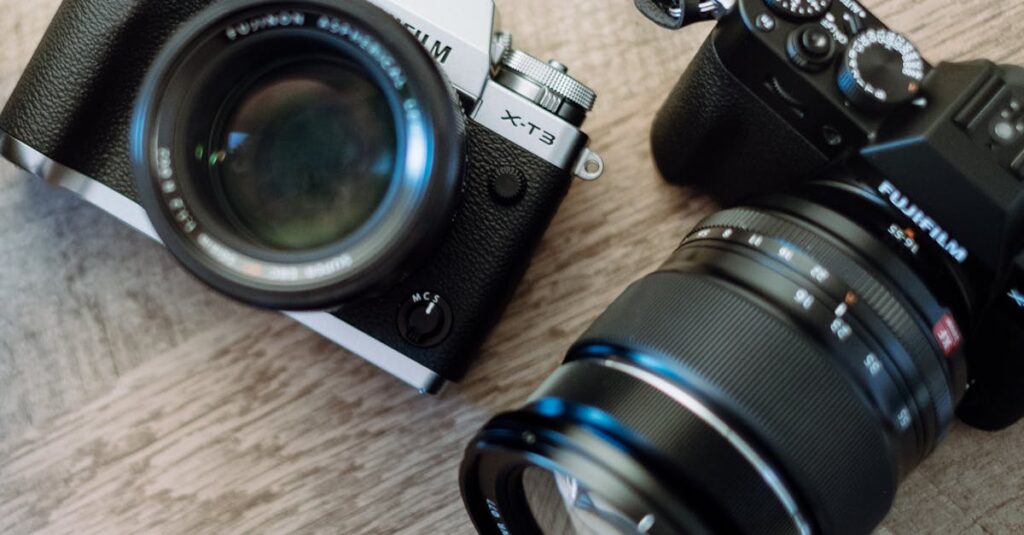
An unmissable rivalry for enthusiasts: Panasonic Lumix S5 vs. Sony A7 III
In the thriving world of modern photography, mirrorless cameras today embody the pinnacle of technology, combining the flexibility of a DSLR with the compactness of a mirrorless camera. Two icons vie for supremacy in the amateur market: the Panasonic Lumix S5 and the Sony A7 III. At first glance, these two models offer a series of intriguing similarities, but behind their technical specifications lies a true battle of expertise, features, and ergonomics. For photography enthusiasts, choosing between these two models becomes a real challenge, as each manufacturer highlights its technological innovations, unique ergonomics, and high-level photographic performance. From pixels to stabilization, video management, and compatibility with various lenses, all these elements shape the daily life of a passionate user. The 2025 landscape reveals a continuing evolution, with competition between Panasonic’s Lumix lineup and Sony’s robust offerings remaining fiercer than ever, with strong arguments on both sides.

Biography and Legacy: When a veterinarian takes up photography with his cameras
In a field as technical as photography, personal experience and a worldview that balances realism and the picturesque greatly influence the choice of a camera. Because these cameras are not just electronic gadgets, but true extensions of the eye and creativity, they tell a unique story. The Panasonic Lumix S5, launched in 2020, positions itself as a versatile camera, ideal for capturing nature, daily life, or even scenes of animal life during veterinary clinic visits. Its intelligent autofocus and advanced image stabilization prove to be valuable allies. Alongside it, the Sony A7 III, equipped with a 24-megapixel Exmor R sensor and an ultra-precise focusing system, leaves behind a colossal achievement in terms of image fidelity and color rendering. Both symbolize the legacy of truly innovative technology, capable of capturing the rapid movement of a small animal, or the softness of a landscape at sunrise. This contrast in technical heritage, between Japanese innovation and European expertise, forges a choice that goes beyond mere hardware to embrace a true photographic philosophy.

LECTURE SUGGÉRÉE
Panasonic Lumix GH6 vs Sony A7 IV: Which One Should You Choose for Your Next Photography Adventure?
Technological Foundations: Comparing the Design and Ergonomics of the Panasonic Lumix GH6 and the Sony…
LIRE L'ARTICLE
Technical performance in detail: what criteria make the difference?
At the heart of a discerning amateur’s considerations, technical performance is the overriding criterion. The question is whether one of the two cameras excels more in specific areas: ISO sensitivity, dynamic range, autofocus, stabilization, or even video capability. The Panasonic Lumix S5 impresses with its built-in stabilization (Dual I.S. 2), combined with compatibility with a wide range of professional lenses, including Leica and Sigma lenses. Its 24 MP full-frame sensor offers excellent control at high sensitivities, allowing you to capture low-light scenes with finesse. The Sony A7 III, meanwhile, contains a similar sensor but stands out for its fast autofocus, particularly thanks to Eye AF technology and face detection, which remain assets for portrait or action photography. Video management is no exception, with the Lumix S5 offering 4K/60p, while the Sony A7 III prioritizes flexibility with its 4K recording limited to 30p but with an excellent color profile. FeaturesPanasonic Lumix S5
| Sony A7 III | Sensor | 24 MP Full-Frame |
|---|---|---|
| 24 MP Full-Frame | Stabilization | Dual I.S. 2 integrated |
| External Optical Image Stabilization (OSS) | Autofocus | Intelligent, tracks faces and moving subjects |
| Eye AF, ultra-precise face detection | Video | 4K/60p, 10-bit output via HDMI |
| 4K/30p, S-Log3 and HLG profiles | This table highlights the complementary strengths and weaknesses of each device, providing a veritable palette of options for amateur photographers looking to get started in video or pure photography. | https://www.youtube.com/watch?v=Jk8IR1ApSCM |
Ergonomics and intuitiveness: what to expect for everyday use?
Panasonic Lumix S5
focuses on intuitive ergonomics, with a tilting screen, a comfortable grip, and a button layout that facilitates handling during long sessions. Its philosophy is to make photography accessible without sacrificing performance. Its interface is fluid, incorporating clearly prioritized menus, but managing settings can still confuse some non-expert users. For its part, the Sony A7 III

Deciphering Light Dimming in Zoom Lenses
In the fascinating world of photography, understanding light falloff in zoom lenses is essential to optimizing every shot. Whether you’re…
CONTINUER LA LECTUREbenefits from a more minimalist interface, but with very careful ergonomics, notably thanks to its high-resolution electronic viewfinder (EVF) and quickly accessible controls. The configurable focus button and joystick promote exceptional responsiveness, crucial for quick shots or in unforeseen situations. The Sony’s light weight also facilitates transport and handling, an important criterion for those who enjoy shooting outdoors or while traveling. Quality of the vari-angle screen Control layout Menu accessibility
- Handling comfort
- Responsiveness when shooting
- Discover our complete camera comparison guide. Analyze the features, performance, and prices of the most popular models to choose the camera that perfectly suits your needs.
- Compatibility and ecosystem: which lenses and accessories should you choose?
- One of the essential elements when choosing a mirrorless camera is compatibility with a wide range of lenses and accessories. The Panasonic Lumix S5, based on the L-mount, opens the door to a range of professional lenses, including Leica and Sigma optics, which appeal to demanding amateurs. Compatibility with other accessories such as flashes, filters, and microphones is also a strong point, making it easier to adapt to different photography styles.

, adopted by a growing number of users, benefits from a wide range of Sony lenses (Gamma FE), with extended compatibility with those of other brands via adapters. Its compatibility with specialized accessories, such as stabilizers, microphones, and remote shutter releases, provides a certain flexibility in the equipment configuration. The minimal integration constraints facilitate the creation of a complete system, according to the current photographic practice or personal preferences.
Wide range of native and third-party lenses Compatibility with professional accessories Accessibility to legacy lens adapters
Ease of migration between different systems Integration with diverse digital workflowsVideo options: an asset or a necessity for modern amateurs?
- The video dimension is now acquiring strategic importance in the choice of a camera, especially for amateurs wishing to produce varied, even professional, content. The Panasonic Lumix S5 excels in its ability to record in 4K/60p with 10-bit output, making it an ideal companion for high-quality video. Built-in stabilization, combined with advanced color management and log gamma profiles, facilitates the production of professional-looking films even when shooting on the move.
- The Sony A7 III, meanwhile, boasts extensive compatibility with editing software, excellent color reproduction, and efficient management of CTA and HLG profiles. Although its video recording rate is limited to 30p, its S-Log3 and HLG profiles allow for highly creative post-production work. Thus, each camera offers distinct advantages: the Lumix for intensive video work, the Sony for flexibility and post-production. The question remains open for enthusiasts who want to master both photography and video in their daily work.
- Criteria
- Panasonic Lumix S5
- Sony A7 III
4K recording
60p, 10-bit, HDMI output
30p, advanced S-Log3 profiles
| Stabilization | Dual I.S. 2 integrated | OSS lens or in-body stabilization |
|---|---|---|
| Color profiles | V-Log, HLG, LUTs compatible | S-Log3, HLG, post-processing reduction |
| Ease of editing | Compatibility with professional software | Excellent workflow support |
| https://www.youtube.com/watch?v=UShffnxYxLY | Value for money: between investment and durability | In the world of photography, purchasing isn’t just about immediate performance. Durability, ease of maintenance, and resale value play a key role. The |
| Panasonic Lumix S5 | is often positioned as a wise investment for those looking for a scalable platform capable of remaining competitive for several years. Its robust design, advanced features, particularly in video, and regular update system guarantee excellent longevity. | For its part, the |
has won over a wide audience thanks to its proven robustness, update options, and ecosystem loyalty. Most professionals and enthusiasts see it as a device that retains significant commercial value, facilitating eventual migration to other Sony or third-party models. The question of value for money thus becomes a reflection on the lifespan, future compatibility, and the overall cost of a complete configuration. Criteria
Panasonic Lumix S5 Sony A7 III Purchase Price
Approximately €2,000 Approximately €1,800 Reliability
| Robust, upgradeable | Very durable, high resale value | Maintenance and updates |
|---|---|---|
| Frequent, improved firmware | Stable, long-term support | Accessory compatibility |
| Professional lenses and accessories | Large lens ecosystem | Future trends: innovation, sustainability, and enthusiast expectations |
| The photography market in 2025 is moving toward ever-greater integration between photo and video, with cameras designed to meet a multitude of needs. Technology is evolving rapidly, with more open mounts, greater connectivity, and artificial intelligence capabilities. Panasonic and Sony are engaged in a race for innovation that aims to make each capture more precise, more creative, and more intuitive. | Photography enthusiasts must now ask themselves whether to choose a mature model or one with a promising future. The robustness, compatibility, and efficiency of cameras like the Lumix S5 or the Sony A7 III will continue to be benchmarks, while new sensors, advanced stabilization, and the fusion of photo and video continue to improve. Durability has become a key value, and we are already seeing new standards emerge for cameras built to last, powered by technology that goes far beyond simple initial features. | Frequently Asked Questions (FAQ) |
| Is the Panasonic Lumix S5 better for video than the Sony A7 III? | The Lumix S5 excels in particular thanks to its ability to record in 4K/60p with 10-bit output, making it a preferred choice for video. The Sony A7 III, however, remains very capable but prioritizes post-processing flexibility. | Which camera is better for beginners in photography: Panasonic or Sony? Both are suitable for enthusiasts, but the Sony A7 III, with its better ergonomics and intuitive photography, might be a slightly more accessible option for beginners. |
What are the notable differences in everyday use?
The Lumix S5 offers more video-oriented ergonomics, while the Sony A7 III prioritizes quick and easy access to photo settings.
Do both cameras offer extensive lens compatibility?


